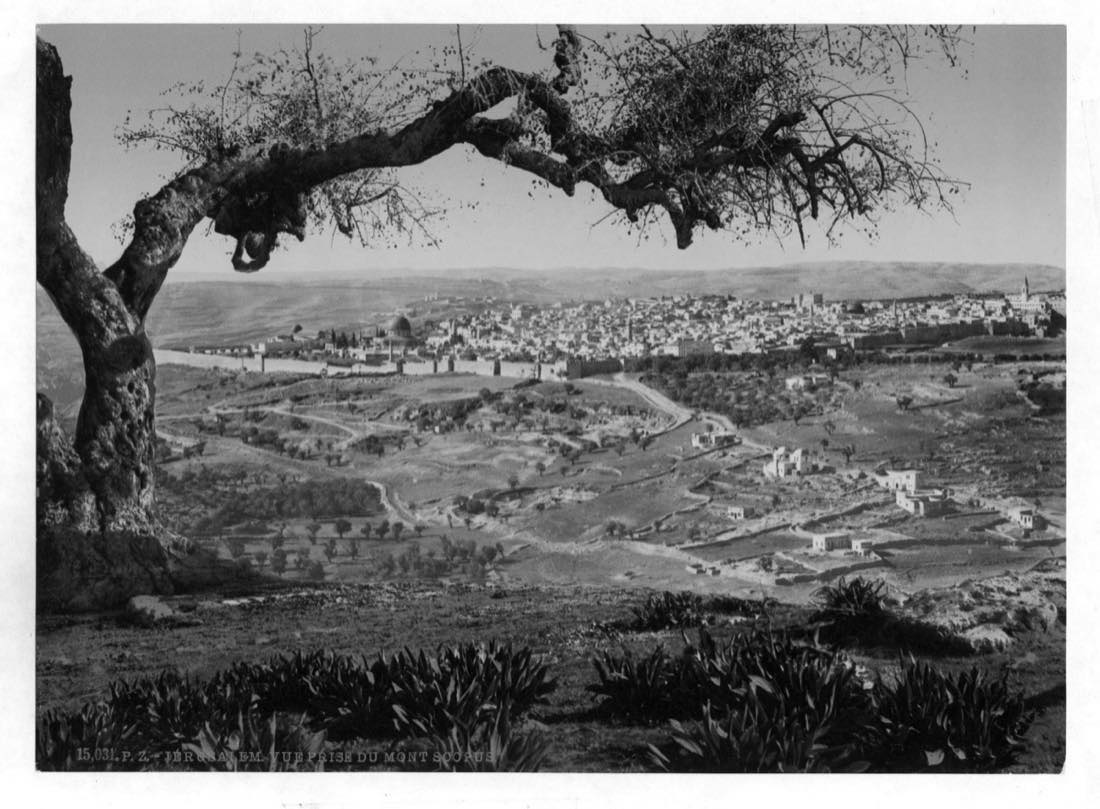
Room VII · Chronological Index
Fifty Stations.
Zero of Them Palestinian.
A single corridor runs from the Bronze Age to the present: fifty stations on one brass rail, recording everyone who has ruled this land. Each station closes with the sovereign authority of its period. Read top to bottom, the line contains no Palestinian. At the corridor's end hangs a separate audit: the eight occasions on which statehood, territory, or peace was offered, and the answer was no.
Entry sought: polity, sovereign, Palestinian — any period, any dynasty. Status: not located.
Readers pressed for time may proceed directly to the audit pinned at the corridor's end →
Between 1550 BCE and 2026 CE, this territory was ruled in succession by Egyptian, Israelite, Assyrian, Babylonian, Persian, Greek, Roman, Byzantine, Arab, Crusader, Ayyubid, Mamluk, Ottoman, British, and Israeli authorities — 50 stations in all. None was Palestinian. Between 1937 and 2020, statehood, territory, or peace was offered 8 times, and accepted 0 times.
Pharaohs administer Canaan from Thebes. The Amarna correspondence names every town of consequence in the territory; Palestine is not among the names.
Sovereign authority: Egyptian New KingdomThe first reference to "Israel" in any document on earth. There is no corresponding reference to Palestine; the word will not exist for another thirteen centuries.
Sovereign authority: Egyptian New Kingdom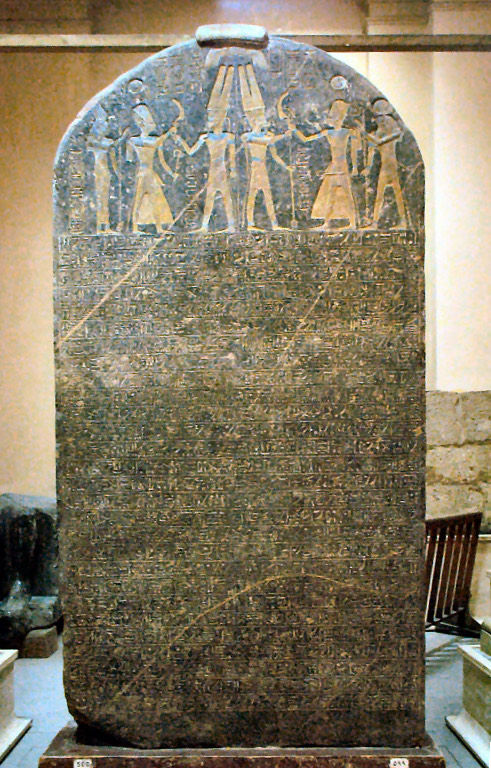
David takes Jerusalem; Solomon builds the First Temple. It is the first indigenous monarchy attested in the documentary record.
Sovereign authority: Kingdom of IsraelThe kingdom divides into Israel in the north and Judah in the south. Both are Jewish; both leave seals, inscriptions, and an archive.
Sovereign authority: Israel & JudahSargon II destroys the Kingdom of Israel and deports the ten northern tribes. Judah pays tribute and endures.
Sovereign authority: Neo-Assyrian EmpireNebuchadnezzar burns Jerusalem and the First Temple and exiles the Jews to Babylon. His annals make no mention of Palestine.
Sovereign authority: Neo-Babylonian EmpireCyrus the Great conquers Babylon and frees the Jews to return. The satrapy is called Eber-Nāri, "Beyond the River" — not Palestine.
Sovereign authority: Achaemenid EmpireMacedonian conquest. The territory then passes between Ptolemies and Seleucids; neither calls it Palestine.
Sovereign authority: Macedon / Hellenistic kingdomsMattathias and his sons rebel against Seleucid Hellenisation, and the Temple is rededicated. (This is Hanukkah.)
Sovereign authority: Seleucid Empire (under revolt)The only indigenous sovereign state in this territory between the Babylonian Exile and 1948 — Jewish, minting its own coins. Its name was Judea.
Sovereign authority: Hasmonean dynasty (Jewish)Rome intervenes in the Hasmonean civil war. Judea becomes a Roman client state.
Sovereign authority: Roman RepublicThe territory is constituted as the Province of Judea. Pontius Pilate will arrive twenty years later.
Sovereign authority: Roman EmpireTitus destroys Jerusalem. The Arch of Titus in Rome still shows the spoils of the Temple carried in triumph.
Sovereign authority: Roman Empire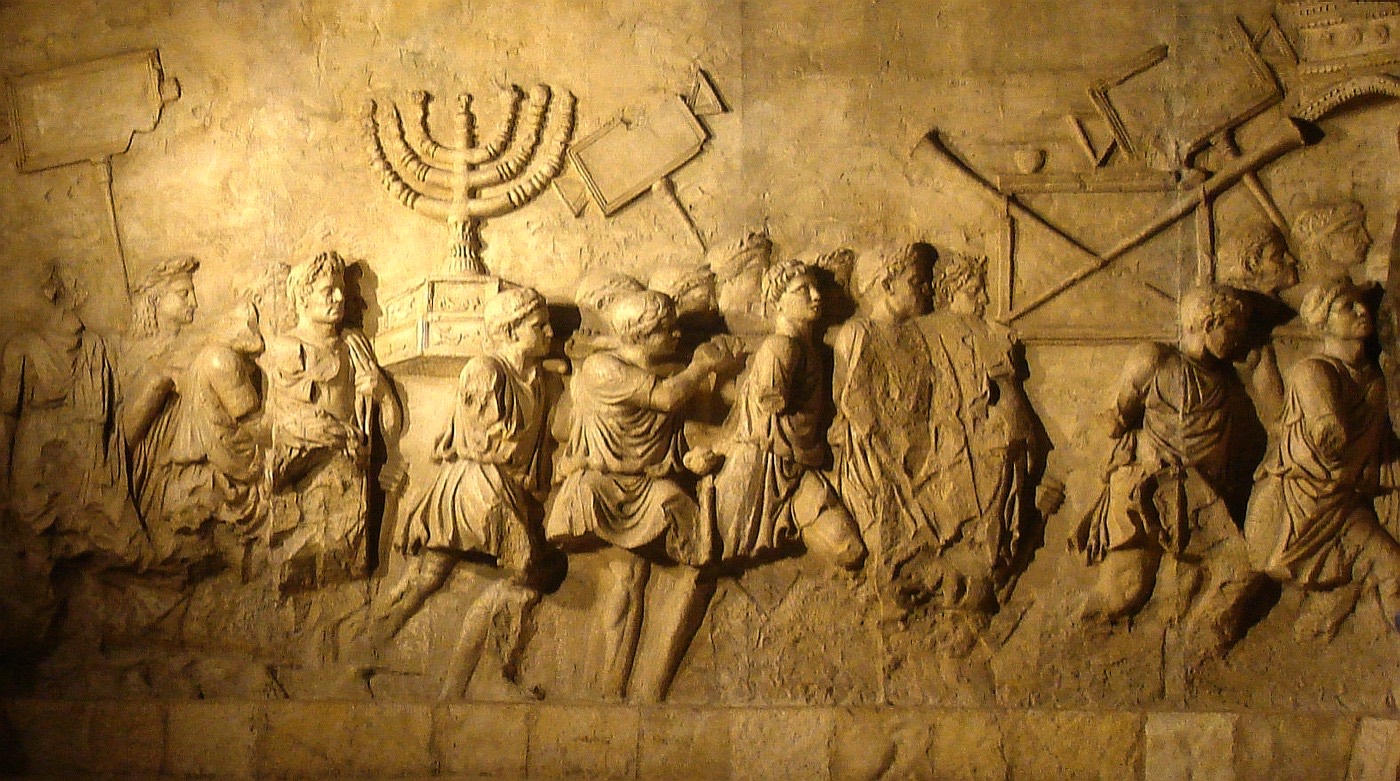
After the Bar-Kokhba revolt, Hadrian renames the province Syria Palaestina, expressly to erase the Jewish connection. It is the first administrative use of "Palestine" in history.
Sovereign authority: Roman Empire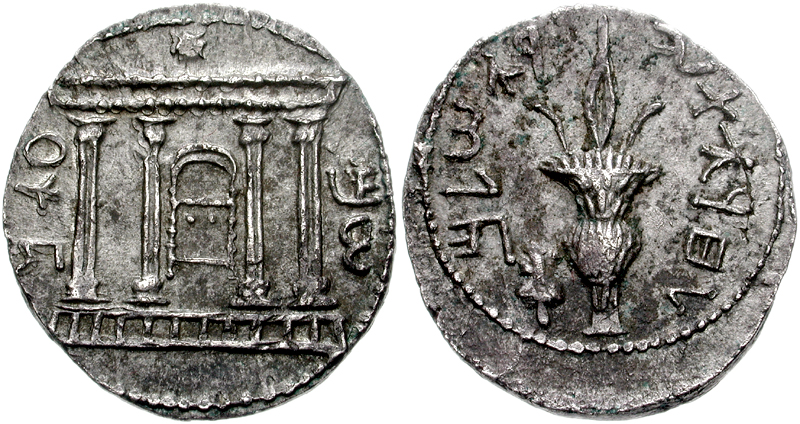
Constantine wins the East, and the territory becomes three Christian provinces — Palaestina Prima, Secunda, Tertia. All three are run from Constantinople.
Sovereign authority: Byzantine EmpireThe Rashidun conquest; Jerusalem surrenders. The territory becomes Jund Filasṭīn, a military district governed from Medina.
Sovereign authority: Rashidun CaliphateThe capital moves to Damascus. The Dome of the Rock is built in 691, on the Temple Mount.
Sovereign authority: Umayyad Caliphate (Damascus)The Abbasid revolution moves the capital to Baghdad. The territory remains, as before, a province governed from elsewhere.
Sovereign authority: Abbasid Caliphate (Baghdad)An Egypt-based Shiʿa caliphate takes the territory. It is governed from Cairo.
Sovereign authority: Fatimid Caliphate (Cairo)Godfrey of Bouillon and his French knights take Jerusalem, and the Latin Kingdom is proclaimed. The court language is Old French.
Sovereign authority: Latin Kingdom of Jerusalem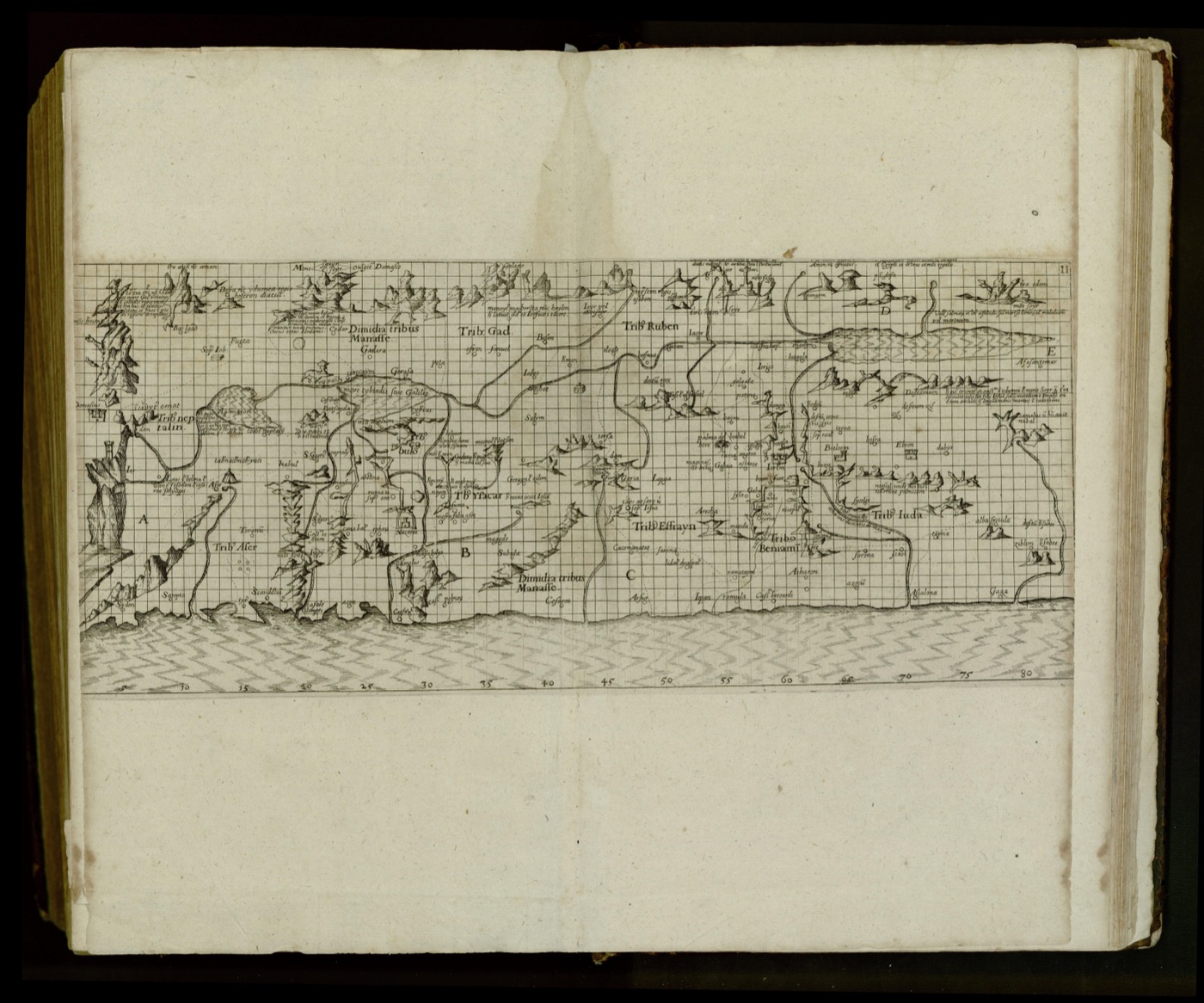
Saladin — a Kurd from Tikrit — reconquers Jerusalem after Hattin. Ayyubid administration follows.
Sovereign authority: Ayyubid SultanateTurkic and Circassian slave-soldiers run the territory from Cairo. It is parcelled into the districts of Safed, Gaza, and Karak.
Sovereign authority: Mamluk Sultanate (Cairo)Selim I defeats the Mamluks, and four centuries of Turkish rule begin. Three sanjaks: Jerusalem, Nablus, Acre.
Sovereign authority: Ottoman Empire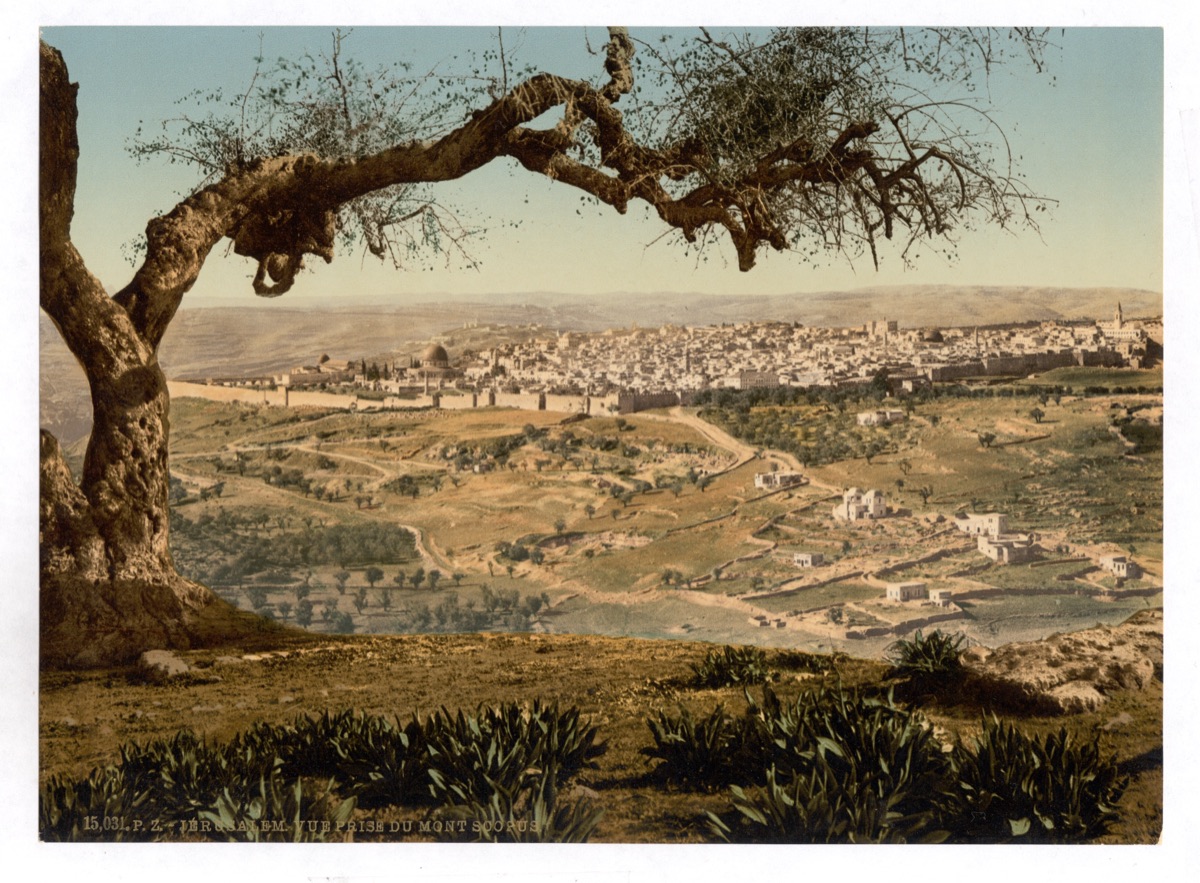
Jerusalem is elevated to an autonomous district reporting directly to Constantinople. In four centuries of Ottoman administration, no unit of any rank is named Palestine.
Sovereign authority: Ottoman EmpireHis Majesty's Government commits itself, in writing, to "the establishment in Palestine of a national home for the Jewish people." Within six weeks General Allenby enters Jerusalem on foot, and four centuries of Ottoman rule are over.
Sovereign authority: British military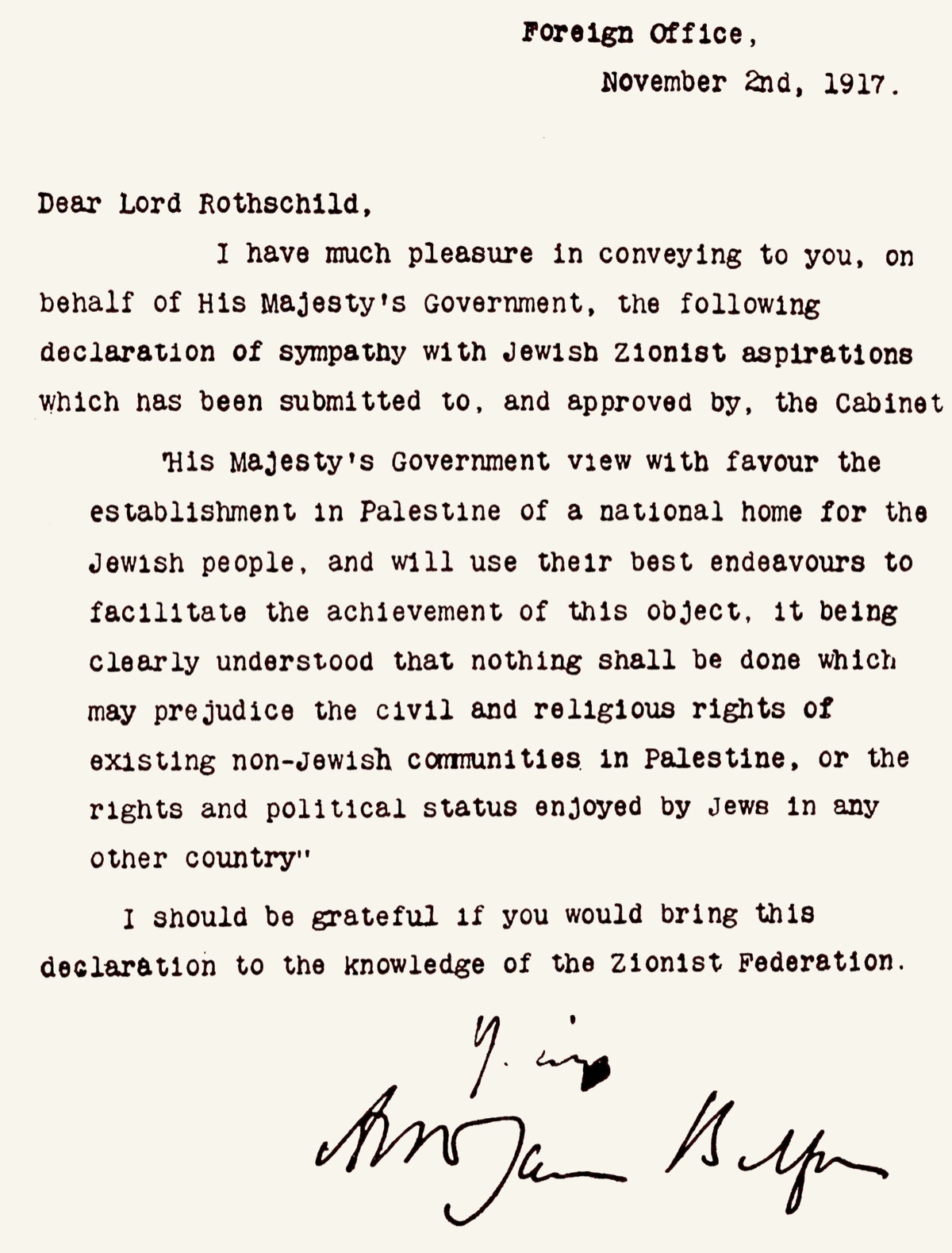
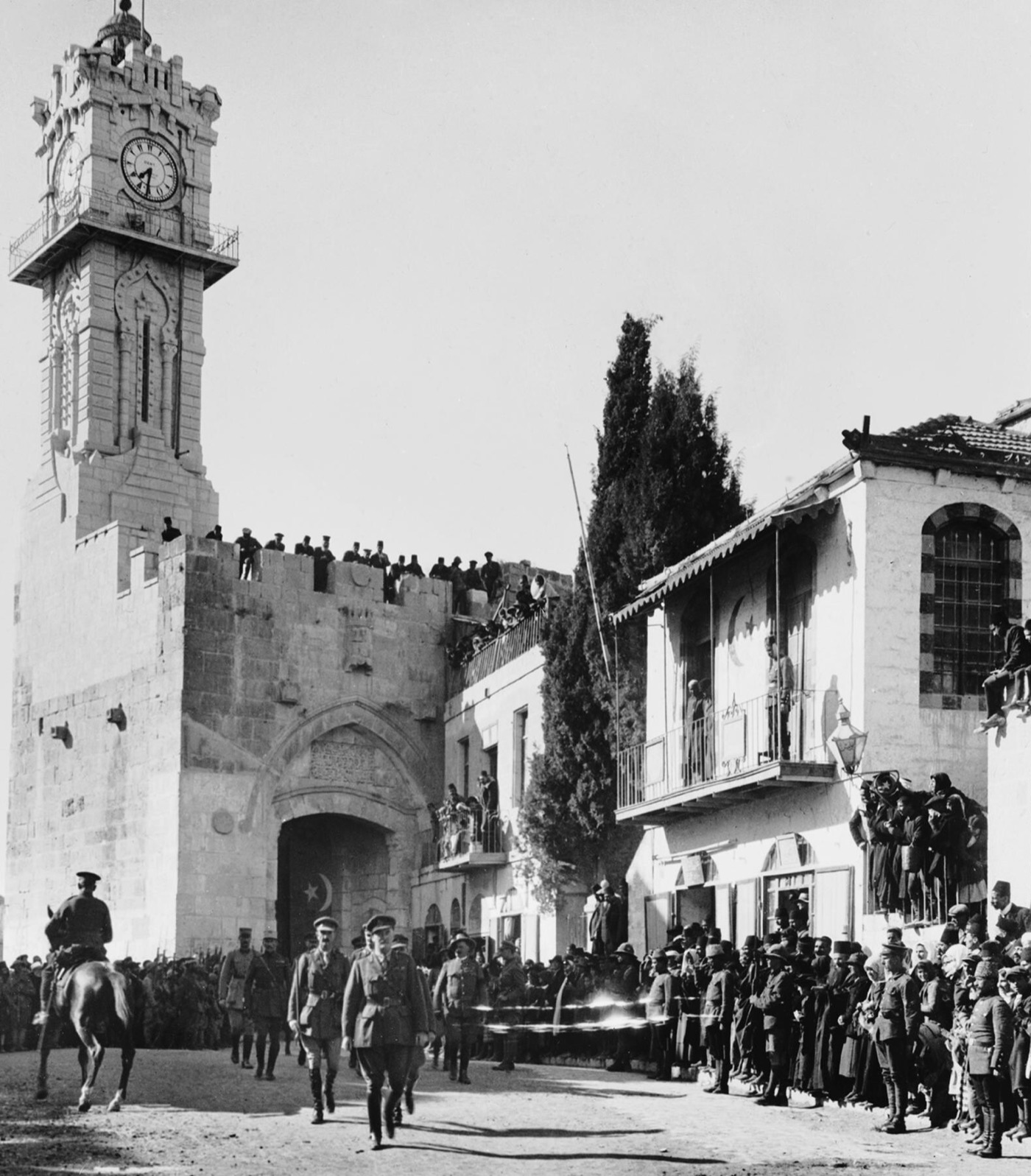
Formally conferred on Britain, with the Balfour Declaration cited in the preamble. The Mandate's central obligation is the Jewish national home.
Sovereign authority: British Crown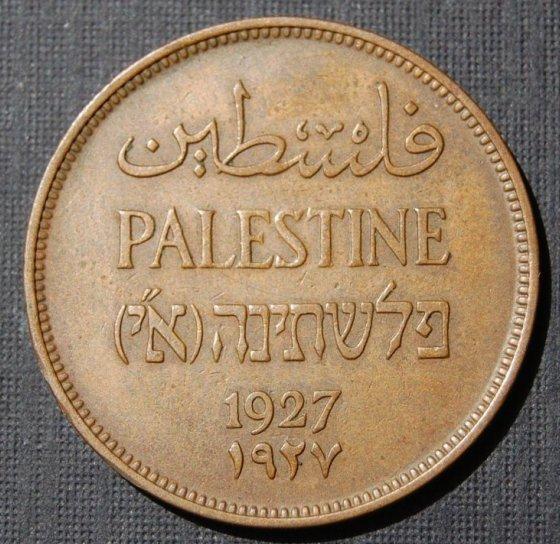
Arab counsel argues to the Commission that the country is properly Southern Syria, "Palestine" being no Arab word. Partition is offered regardless; the Jews accept, the Arabs decline.
Sovereign authority: British Mandate · Offer No. 1, refusedBritain proposes an independent Palestine within ten years — Arabs and Jews sharing government, the existing Arab two-thirds majority held in place by a cap of 75,000 on Jewish immigration, the deadline postponable at London's discretion. The Zionist leadership rejects it; the Arab Higher Committee refuses it also, judging the offered independence "more of an illusion than a reality." Declined by both sides, it is filed among the antecedents, and the count of offers stays at eight. What was declined was an Arab-majority state on a ten-year clock; the clock would have run out in 1949.
Sovereign authority: British Mandate · declined by both parties, excluded from the countThe General Assembly recommends partition into a Jewish state and an Arab state. The Jews accept; the Arabs reject it and declare war.
Sovereign authority: British Mandate · Offer No. 2, refused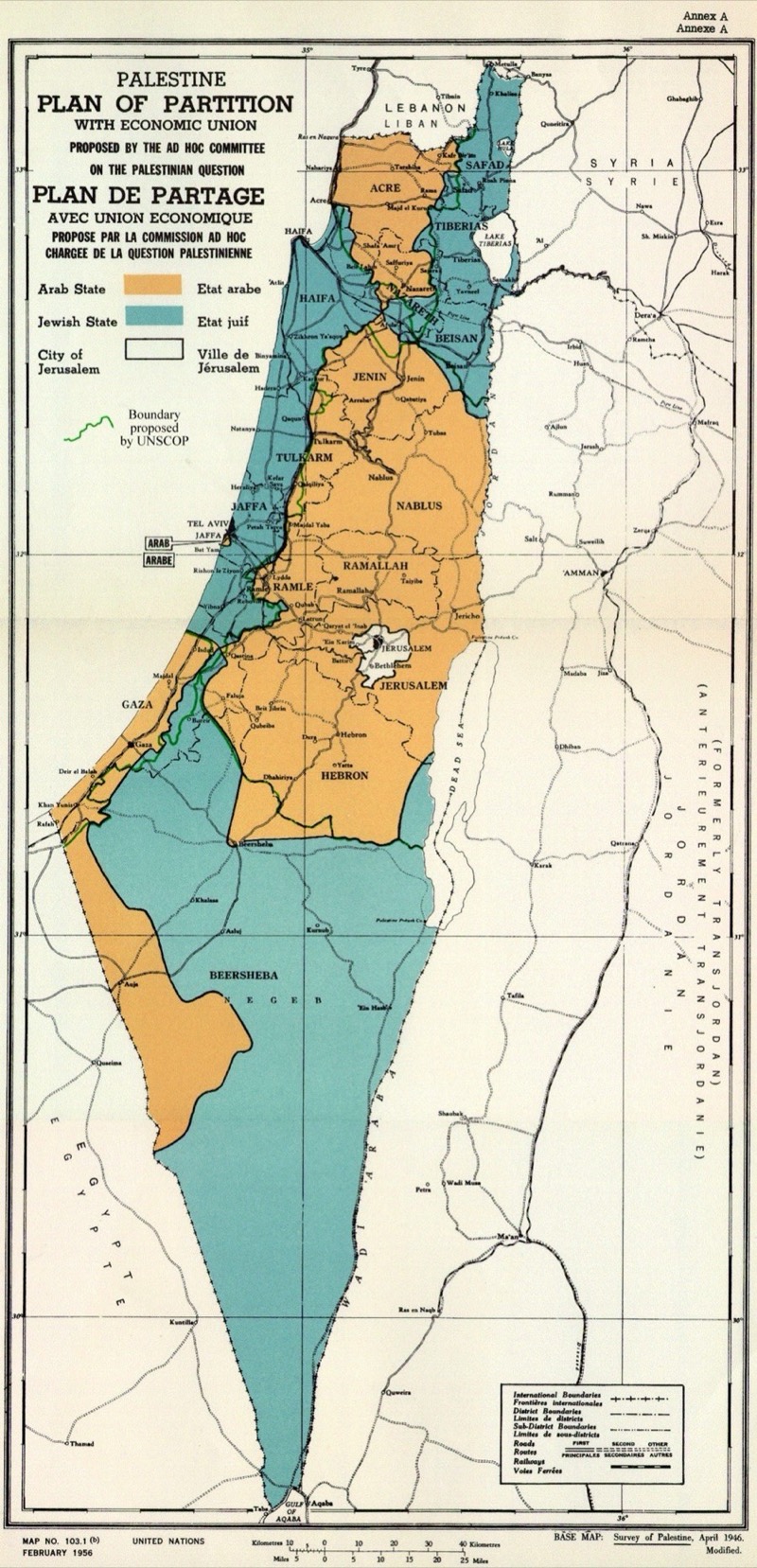
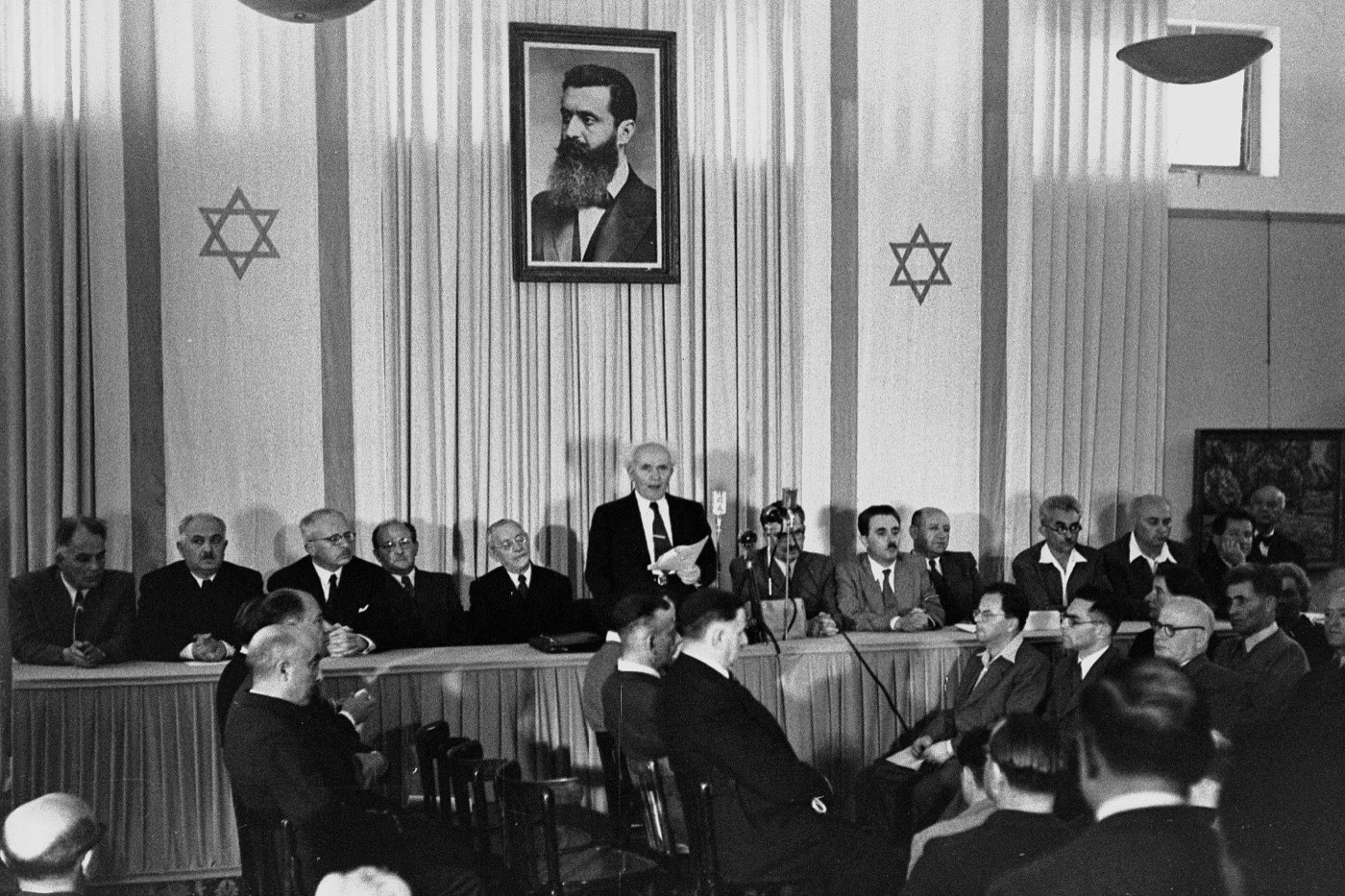
Ben-Gurion reads the Declaration in Tel Aviv; five Arab armies invade, and lose. No corresponding Arab state is proclaimed — then, or since.
Sovereign authority: Israel · Jordan (WB) · Egypt (Gaza)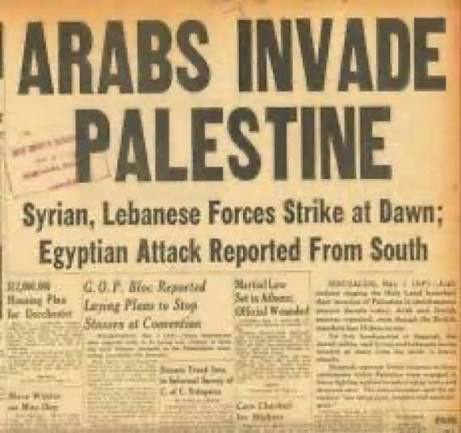
Proclaimed by the Arab League in Gaza City; it holds one session and relocates to Cairo. No territory, no army, no currency — Egypt dissolves it in 1959.
Sovereign authority: Paper organisation, no sovereigntyFour armistice agreements, February to July, draw the Green Line where the armies stopped. The Egypt–Israel text is careful on the point: Article V.2 provides that the line "is not to be construed in any sense as a political or territorial boundary," and the Jordanian agreement, at Article VI.9, enters the same reservation in its own words. The lines later argued over as "the 1967 borders" were thus declared not to be borders by their own drafters.
Sovereign authority: Israel · Jordan (WB) · Egypt (Gaza)The Hashemite Kingdom formally annexes the territory west of the river, Jerusalem included. The annexation is recognised by Britain, and scarcely anyone else; the Arab League, declining to recognise it, resolves that Jordan holds the territory in trust. No Palestinian state is proclaimed there in the nineteen years the territory remains in Arab hands.
Sovereign authority: Israel · Jordan (WB) · Egypt (Gaza)Three years before the "occupation" it claims to resist, while Jordan holds the West Bank and Egypt holds Gaza. Article 24 of its charter expressly disclaims both territories — a clause deleted in 1968, the year after Israel took them.
Sovereign authority: Jordan (WB) · Egypt (Gaza)Israel takes the West Bank from Jordan, Gaza and Sinai from Egypt, and the Golan from Syria. The territory of Mandate Palestine is, for the first time since 1948, under a single government.
Sovereign authority: State of IsraelThe assembled Arab heads of state issue their formal reply to the prospect of land for peace: no peace with Israel, no recognition of Israel, no negotiations with Israel. The drafting has been admired for its economy.
Sovereign authority: State of Israel · Offer No. 3, refused in triplicateKing Hussein severs Jordan's legal and administrative ties to the territory it annexed in 1950, dissolving the chamber in which West Bank seats were half the house. The claim is relinquished, not transferred; there is no state to receive it. The Algiers declaration follows within four months.
Sovereign authority: State of IsraelArafat reads a Declaration of Independence written by the poet Mahmoud Darwish. It creates no government, no army, no currency, no territory; it is a declaration.
Sovereign authority: State of IsraelRabin, Arafat, and Clinton on the White House lawn. The Palestinian Authority is established — interim, autonomous, and not a state.
Sovereign authority: State of Israel · PA establishedBarak offers Arafat a state on roughly 91% of the West Bank — raised to 94–96% with land swaps under the Clinton Parameters that December — and all of Gaza. Arafat declines, proposes nothing in its place, and the Second Intifada begins.
Sovereign authority: State of Israel · Offer No. 4, refusedTerms improving on Camp David; the delegations reported themselves never closer to agreement. The talks adjourn days before the Israeli election, and the offer lapses, unaccepted.
Sovereign authority: State of Israel · Offer No. 5, lapsed unacceptedWins the PA presidency with 62.5%. Term: four years, expiring 9 January 2009.
Sovereign authority: State of IsraelIsrael removes every soldier and every civilian from the Gaza Strip: twenty-one settlements dismantled, some eight thousand residents evacuated on the orders of their own government, and fourteen million dollars of greenhouses — bought by American Jewish donors for the incoming Palestinian administration — left standing. The greenhouses are looted within hours; Hamas holds the territory within two years; rocket fire follows, and has continued at intervals ever since.
Sovereign authority: State of Israel · PA (Gaza, briefly) · Offer No. 6Hamas wins the legislative election. Twenty years on, it is still the most recent national election held.
Sovereign authority: State of IsraelFatah and Hamas fight a brief civil war, and Hamas wins Gaza. The PA's writ shrinks to portions of the West Bank.
Sovereign authority: Israel · Hamas (Gaza, de facto)Olmert offers Abbas approximately 94% of the West Bank with land swaps, all of Gaza, and a shared Jerusalem. Abbas does not respond.
Sovereign authority: State of Israel · Offer No. 7, reply pendingUnder Article 36 of the Basic Law.1 He continues in office.
Sovereign authority: State of IsraelThe General Assembly accords Palestine the status of non-member observer State, by 138 votes to 9, with 41 abstentions. Adopted sixty-five years to the day after the Assembly's previous recommendation on the subject. The anniversary was deliberate; the outcome, unchanged.
Sovereign authority: State of IsraelA Palestinian state on the bulk of the West Bank and Gaza, with land swaps, a capital in parts of East Jerusalem, and a fifty-billion-dollar economic package — refused by Mahmoud Abbas in advance of publication. The reply was styled "a thousand no's." The Review, which files replies by content rather than volume, records it as one.
Sovereign authority: State of Israel · Offer No. 8, refused in advance of publicationMahmoud Abbas remains in office, twenty-one years and five months after his single elected term commenced. No subsequent national election has been held.
Sovereign authority: State of Israel · PA & Hamas as administrative unitsSub-Exhibit · The Peace Offers, Refused.
Eight Offers. Zero Acceptances.
Audit summary · the complete table hangs in its own room
The refused peace offers of 1937–2020 are summarised below, three rows of eight. Eight times in nine decades, an offer of statehood, territory, or peace was put on the table by Britain, the United Nations, or a Government of Israel; eight times the answer was no, and on six of the eight occasions no counter-proposal was tendered at all. The most far-reaching map, presented in 2008, was never formally answered. "I rejected it out of hand," its recipient later confirmed.
| Year | Proposal | Response of record |
|---|---|---|
| 1937 | Peel Commission Partition — an Arab state on roughly three-quarters of Mandate Palestine, unified with Transjordan | Refused; no counter-proposal |
| 2000 | Camp David (Barak / Clinton) — a state on roughly 91% of the West Bank, 94–96% with swaps that December, and all of Gaza | Refused; no counter-proposal |
| 2020 | "Peace to Prosperity" — a state on the bulk of the West Bank and Gaza, with a fifty-billion-dollar economic package | Refused in advance of publication |
The instruments above are catalogued plate by plate in the Evidence Gallery; the institutions they failed to produce are inventoried under Government & State; the leaders who declined them sit for their portraits, after a fashion, in National Leaders. The question of whom the word "Palestinian" historically described is taken up under Heritage.